


In April 29, 1916, The Fellsmere Tribune published an article heralding Monday, May 1 as a “great day” for the city. Detailing what was to be the first annual flower show on this day, the article dubbed Fellsmere the “City of Roses.” After the inaugural event, however, the shows stopped, and it was 82 years before a 10-acre plot of land named Country Care Roses truly allowed the city to earn its esteemed title.
In 1998, Rhonda and Bill Spilman became the owners of this wide-open tract adorned with a rustic log cabin. In true country style, the cabin featured a fireplace built with stones shipped from Montana. At the time, Rhonda was a teacher and Bill was a property manager, and both of their backgrounds influenced their vision for their new property.
As Rhonda says, “I was always cooped up inside as a teacher, but as a kid I was always outside. I wanted to be outside again.” Bill was well versed in landscaping, and he could see the potential in front of them. Literally digging in, they decided on the property’s name. While the log cabin provided the “Country,” they added the “Care,” and the “Roses” fulfilled their dream.
Possibly the most defining moment of the rose garden’s auspicious beginning was when Rhonda met her first naysayer. Approaching the man whom they had hired to clear some of the land, she asked him to clear a spot for a rose garden. She recalls, “He laughed at me and said, ‘Do you know where you are? Roses won’t grow here!’” Her response was to prove him wrong.

She and Bill began to research, and they trucked in 10 loads of soil, with each truck holding 20 yards. They built elevated beds for the roses and then began experimenting with a variety of plants. According to Rhonda, the driving force behind her decisions was that she wanted a garden that boasted historical significance and was also easy to maintain. These choices led her to “old garden” roses.
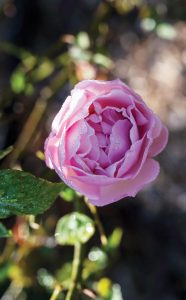
This designation refers to any class of roses developed before 1867, the year the first hybrid tea rose was introduced, ushering in the era of “modern” roses. Old garden roses are full of historical significance; even their look is reminiscent of a time when clothing had ruffled layers and hairstyles were ornate. With fuller blooms, a soft color palette, and unparalleled scent, they are pleasing to the senses, but their true power lies in their ability to survive. Highly resistant to disease, they are the roses most often found growing in the wild. Rhonda selected this hardy stock because “nobody waters or fertilizes in nature, yet they grow.” Beautiful, tough, and also historical—Rhonda knew these roses would be her mainstay.



Her largest historical influence is Empress Josephine, Napoleon’s first wife, who single-handedly raised the popularity of roses throughout Europe. Napoleon divorced her due to her inability to provide him an heir, but he chose to support her and her love for the old garden roses she continued to grow at her Château de Malmaison. Rhonda found it sad that no memorial gardens were grown in Josephine’s honor, so at the entrance of Country Care is a sign that reads “Li’l Malmaison Gardens.”

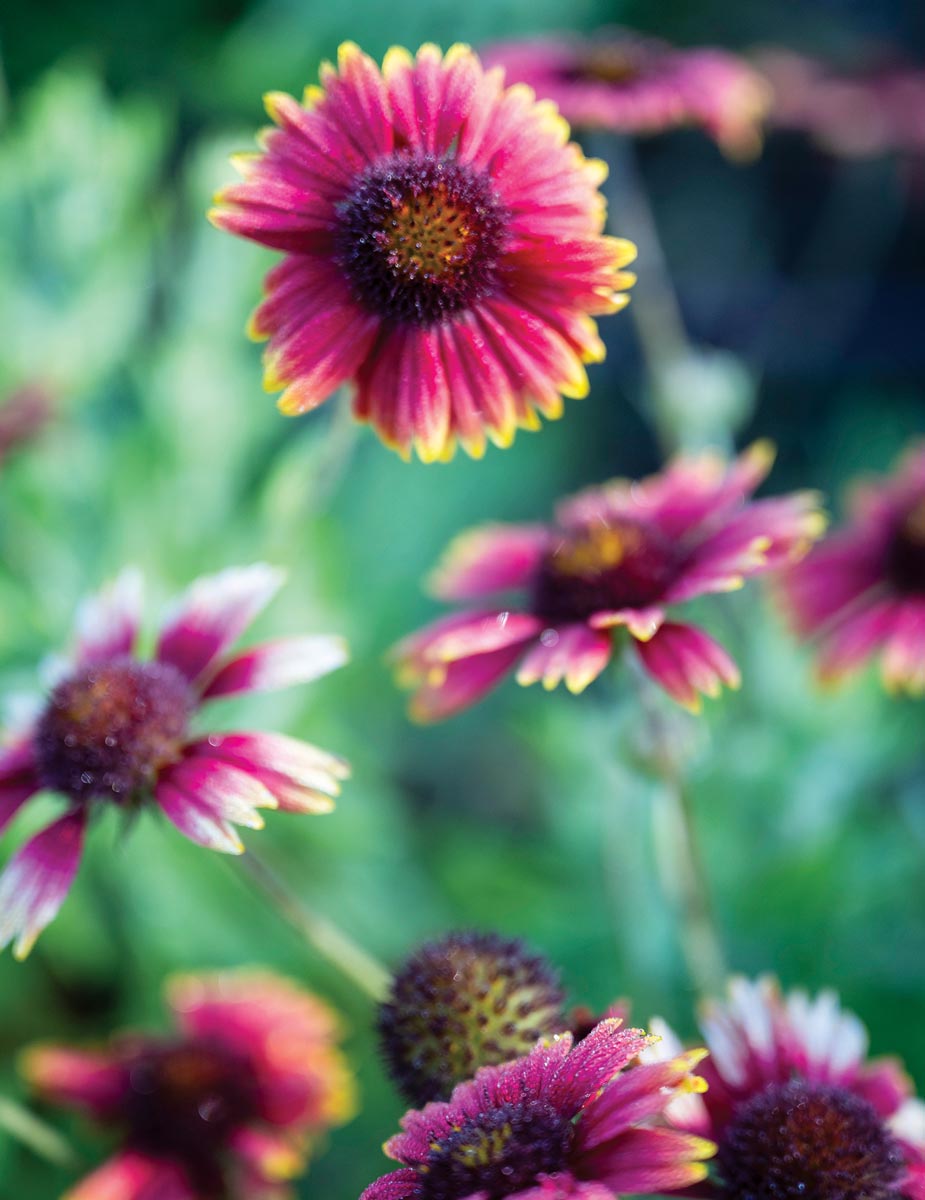
While the sign says “Li’l,” the Spilmans’ garden is anything but little; it now holds more than 300 rose plants in 14 species. Beyond the opening trellis, there is an explosion of old garden roses such tea roses, China roses, Noisettes, and Bourbons, all in shades of reds, pinks, whites, and more variations. Mixed into this array are a multitude of other botanical beauties, such as sage and other salvias, zinnias, and bougainvillea and jasmine vines.
The reason for this particular mix of flowers and plants? As Rhonda says, “There needs to be balance between roses, birds, insects, and animals.” She did not want to use pesticides or spray, so she selected plants that would bring birds and insects to create an ecosystem that would mimic gardens found in the wild. For example, she planted a Macartney rosebush that is now 10 to 15 feet tall and almost as wide. Thick and dense, it attracts birds, bees, and even possums.

In addition to creating their garden oasis, the Spilmans also concentrated on planting trees and bushes around the property that would add to the ecosystem. Bill researched and experimented with what worked in the southern Florida climate and what Disney planted in Orlando. The results are a menagerie of everything from bamboo to Japanese blueberry trees (the type used to make topiaries at Disney), to silk floss and pomelo trees. They also planted crepe myrtles to carry the gardens when the roses hibernate in the heat. While 65 to 70 degrees Fahrenheit is perfect for roses, the myrtles thrive in much higher temperatures and dot the landscape in yellows, oranges, and purples.

While Florida heat is a challenge for plants, so are hurricanes, and the Spilmans have suffered their share of loss. They relocated the garden once after flooding from a hurricane in 2008, and a few trellises remain in testament to the “original” garden. Both Spilmans take it in stride, however. Bill says, “A garden is simple. If you make a mistake, you fix it. You just dig it up and move it.” He also knows there will always be more trellises to build; he is used to building them up to 40 feet long.

Trellis building and garden expansion are constant in their world because Rhonda always asks herself, “What do I want to see every day?” This question has led to a sanctuary they cherish and that others love as well. Currently, it is open to the public (except in the summer) by appointment, because Rhonda believes gardens are meant to be shared. There is no fee for garden tours; she simply loves teaching about what she has created. For visitors who catch the gardening bug, she encourages them to research “who is growing what and where,” and to check out businesses such as Rose Petals Nursery in Newberry, up in Alachua County.

One local resident who owns a rosebush cultivated at Country Care is Linda Votapka. She fondly recalls planting her roses years ago and has loved the results ever since. Her husband, Fellsmere historian Rich Votapka, calls Country Care “the best kept secret of Fellsmere.” Both Votapkas believe that “you would be hard pressed to find horticulturists with this amount of knowledge and expertise anywhere else.” Rich theorizes that the annual Fellsmere flower shows didn’t gain traction after 1916 due to the city’s World War I effort, but he agrees that Country Care helps Fellsmere hold the appellation “City of Roses.”

Beyond the obvious beauty of Country Care Roses and the education that lies in the roses’ history, there is also a transcendent magic permeating these grounds. This atmosphere teaches that in both gardens and life one must follow instincts, adapt to harsh conditions, create a strong ecosystem, fix a problem and rebuild, find help when it gets too hot, and, above all else, create wild beauty. The Spilmans felt this magic and let it guide them as they transformed barren land into a stunning haven of color and life.




 True Tails is a series written by Amy Robinson for Vero Beach’s dog lovers. Ask Amy about your dog’s behavior by clicking below.
Facebook Comments