


Visitors to the campus of Maitland Farm Preschool in southwest Vero Beach will not find any electronic devices such as tablets or computers. They will find curriculum plans and learning stations, as are common in modern preschool classrooms, but it is what they discover beyond the classrooms that may come as a surprise.
A stroll around the 5-acre property reveals lots of lush greenery and shade trees. There’s a nature trail, a meadow, and a garden. And the visitor may be greeted by Sammy, Poppy, Fern, and Shelly—nothing too out of the ordinary, except that Sammy is a donkey, Poppy and Fern are goats, and Shelly is an African spurred tortoise. The small menagerie also includes two rabbits and seven hens named after female rock stars.

The whole atmosphere abounds with rustic beauty and opportunities for hands-on learning in a peaceful, bucolic environment.
“All of our projects have a purpose and are working on skills,” says owner and director Ashley Kazen, referring to the mixture of conventional classroom activities and somewhat unconventional lessons born of the school’s distinctive environment.

In each classroom, depending on whether it is set up for 2-, 3-, or 4-year-olds, learning centers keep little hands and minds busy with art, blocks, dramatic play, science, math, reading, writing, and manual manipulation tasks. There’s also “circle time” for songs, stories, and sharing. But Maitland also places a strong emphasis on children’s natural sense of wonder and its ability to enhance the education process.

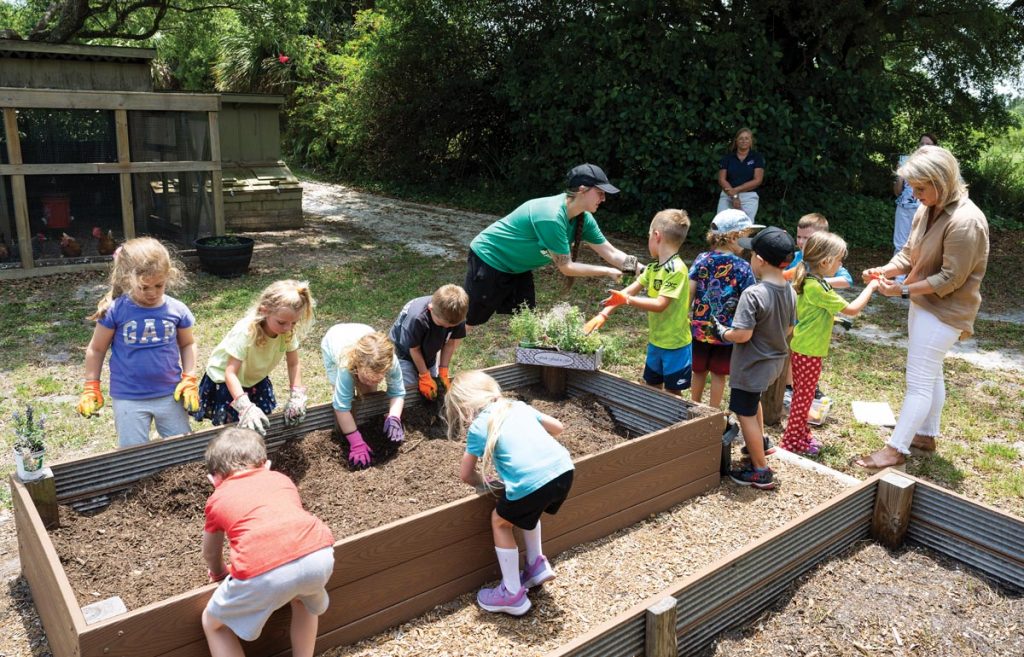
For example, a recent art project depicted the life cycle of a plant; but when Maitland’s 2-year-olds water the seasonal flowers and vegetables in their raised garden bed, they learn the process without even realizing they’re learning it. It’s just part of their everyday experience, but they eat the tomato with an intrinsic understanding of where it came from.
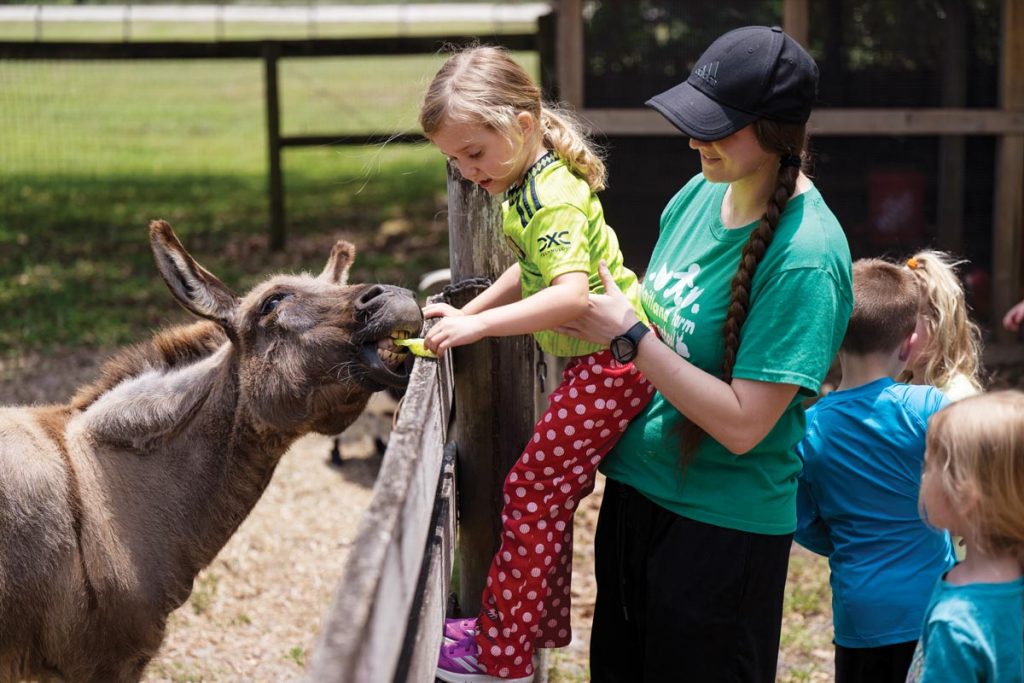
Helping care for the school’s resident animals is another source of experiential learning for the little ones, though for liability reasons all feeding and petting are done through fences. Students learn about different animals’ needs and behaviors, and they even help collect the eggs laid by Pepper, Gladys, Blondie, Ruth, June, Jewel, and Henrietta.
It’s not every 3-year-old who knows that African tortoises love hibiscus flowers, but Maitland’s students know first-hand, because when a hibiscus shrub was planted in Shelly’s enclosure, she nibbled it down to a nub in a single day!
Each classroom has a porch, and when lessons are held there, it is not unusual for teachers to notice that students’ attention improves; there is just something about the fresh air, the sounds of nature, and the freedom of being outdoors. Children who tend to become overstimulated indoors often do much better when surrounded by some open space.
Maitland Farm’s expansive “outdoor classroom” provides a wonderful open-air setting for various lessons, circle time, tricycle riding, and educational play. Outdoor classroom days occur twice a month, and teachers are encouraged to be creative in developing new activity ideas.
Between the barnyard and the gardening areas is an oak tree known as the “meeting tree.” Even the littlest feet head there in between activities.

How is it possible to keep such tiny tots from “going rogue” while outdoors? “Well, they know that if they try to run off, they’ll have to hold the teacher’s hand, and they want to keep their independence,” Kazen explains with a smile.
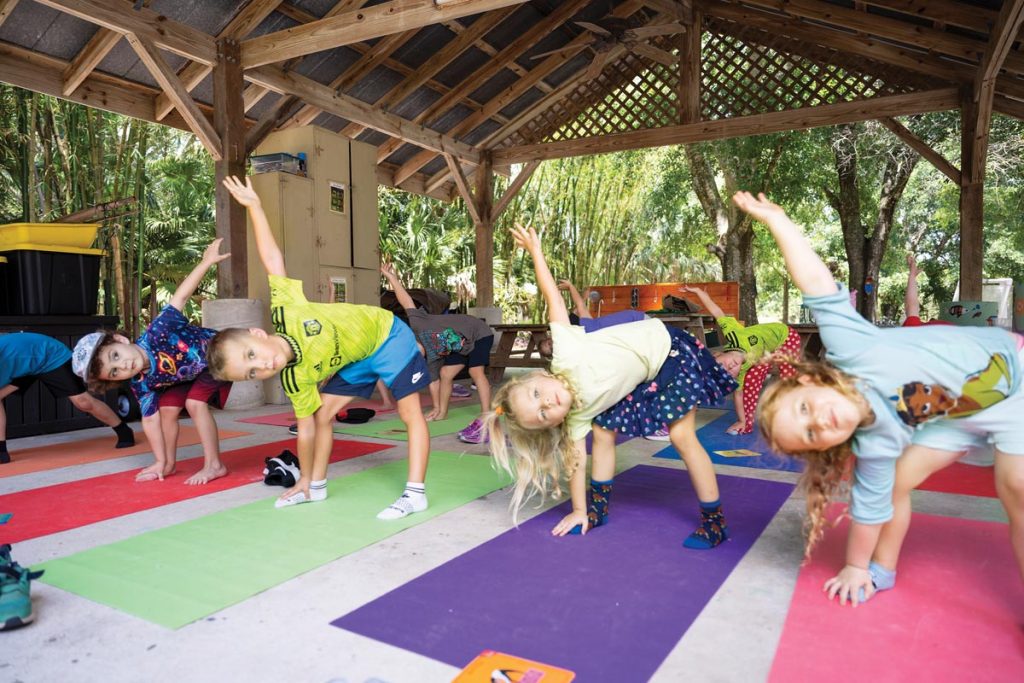
The Afternoon Adventure program offers the children what Kazen describes as “engaging experiences in nature exploration, music and movement, and yoga.”
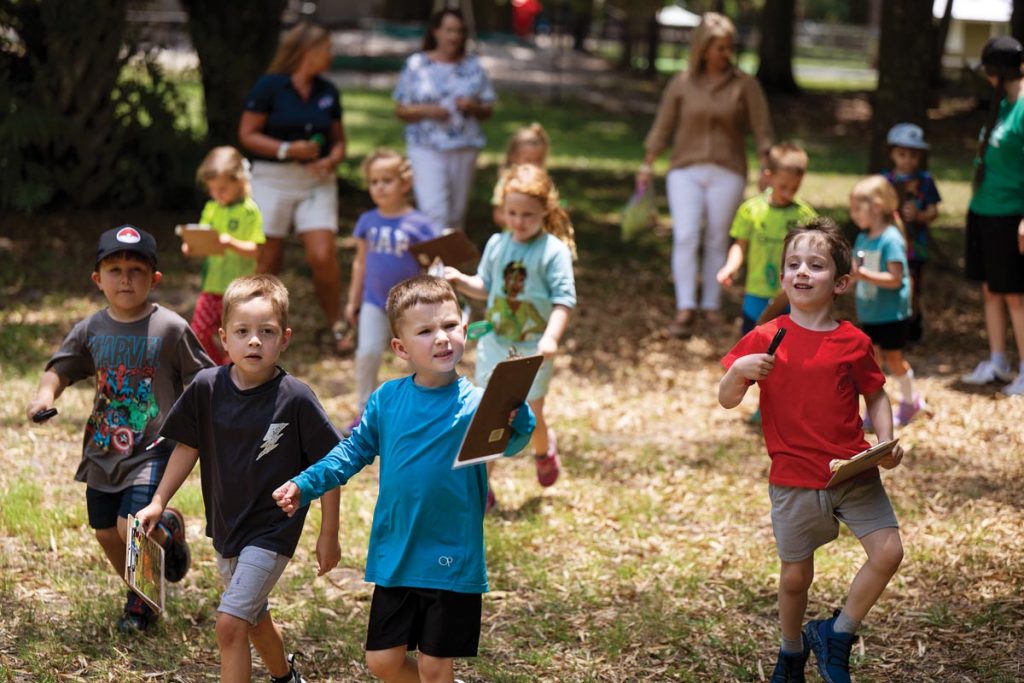
Given the amount of time they spend outdoors, all of the children bring water bottles to school, and a water station ensures that everyone stays hydrated.
Kazen, a former Maitland Farm teacher, purchased the school from founder Sandy Kahle about three years ago and has built on the firm foundation already in place. “At the same time,” Kazen says, “we are making thoughtful enhancements that reflect our shared values.” Encouraging teacher input and fostering a true sense of community among staff members and families have been two of her key priorities.
Kazen is also enthusiastic about making the most of the property’s vast potential. “Our outdoor learning environment has grown with the creation of an interactive nature trail,” she explains. “It’s become a place where students and teachers can enjoy seek-and-find games, color and shape matching, nature observation, and much more. We have even more exciting enhancements planned for the trail, and we can’t wait to bring those ideas to life.”
These planned additions include a fairy garden and a music wall—literally a wooden wall with various items affixed that can be struck, plucked, strummed, shaken, rung, or otherwise manipulated to generate sound. Such a setup serves as a fantastic creative outlet while honing motor skills and implicitly teaching the children about acoustics.
Family involvement is valued at Maitland, and parents and grandparents can often be found participating in both indoor and outdoor activities. School-wide events such as Focus Day, Reading Week, and the annual Hat Parade fill the campus with even more parents. Focus Day is “kind of the opposite of ‘bring your child to work day,’” smiles Linda Niedziela, the school’s assistant director. For the Hat Parade, each class makes hats according to a particular theme, and the children march proudly as family members look on.
Sammy the donkey’s 30th birthday party was another huge hit with Maitland’s families.

Last spring, Maitland held its first art show, which allowed parents to go beyond viewing their own children’s art and explore the creations of all the other students. Such an event is a good way for them to see what different classes are learning.
Currently, about 100 children are enrolled at Maitland Farm, and that seems to be a comfortable number for the 22 staff members. “We’re licensed for 150,” says Kazen, “but we would never have that many. We don’t want to lose the family atmosphere.”

Twice a month, in alternation with outdoor classroom time, each class visits the generously sized kitchen for some cooking, kiddie-style. Rice cakes might serve as moons when outer space is the topic, and mashing apples into applesauce can help drive home a lesson about the ubiquitous fruit. Maitland students even produce their own homemade modeling dough!
Kazen has engaged a curriculum developer to collaborate with teachers on lesson planning. “This ensures we’re intentionally embedding opportunities for children to meet—and exceed—their developmental milestones,” she explains. “Everything we do has a purpose. We believe deeply in learning through play, and our role is to facilitate a love of learning in every child. We’re not only preparing our students for primary school; we’re helping to nurture kind, confident, and compassionate human beings.”
Through all the planning, decisions, and everyday hustle and bustle, one thing remains constant for Kazen: her “deep respect and love for what Mait-land is and always has been.”
“I believe in our philosophy, our mission, and the heart behind all we do,” she says. “The positive feedback we’ve received from our families affirms that we’re on the right path—and it makes us incredibly excited for what’s ahead for Maitland!”





 True Tails is a series written by Amy Robinson for Vero Beach’s dog lovers. Ask Amy about your dog’s behavior by clicking below.
Facebook Comments