


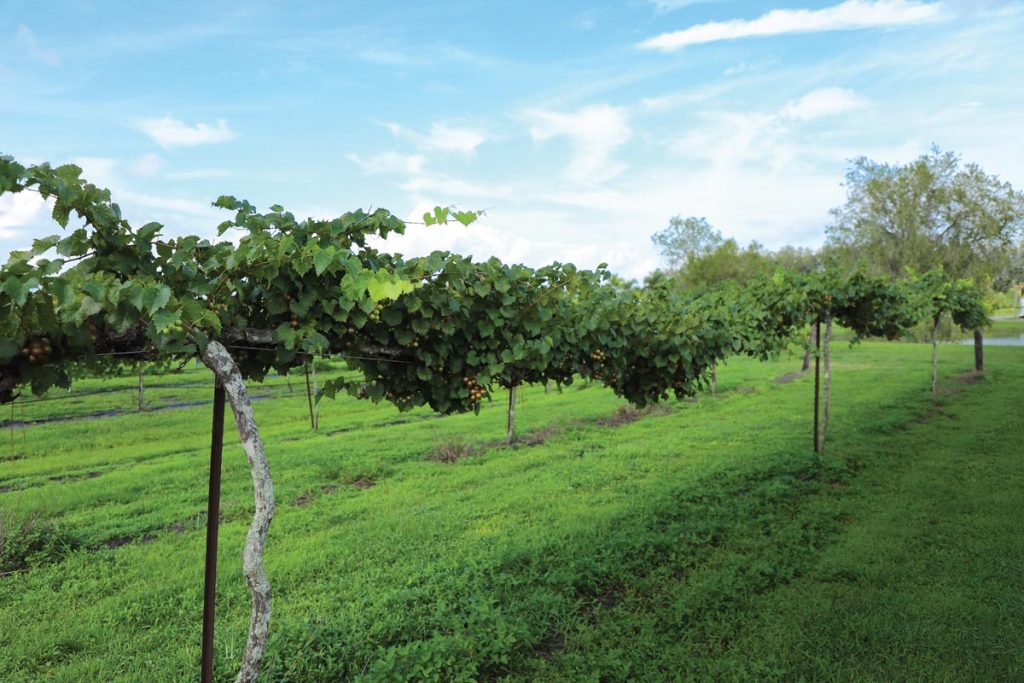
Winemaking in North America began in Florida. The climate here has always been both a challenge and an opportunity. While the most famous varieties of vines generally cannot tolerate the climate and environment of Florida, North America’s native Muscadine vines flourish here. Today, Florida winemakers are exploring the potential of Muscadine; they are also trying some flamboyant experiments with other types of fruit, from blueberries to Key limes.
The first North American vineyards were in northern Florida. The ill-fated French Huguenot colony at Fort Caroline made wine, and, in 1564, the logbook of an English captain who sold them supplies stated that although they had failed to grow food, “in the time the Frenchmen were there, they made 20 hogsheads of wine.” Perhaps it was a question of priorities. The Spanish likewise made wine at St. Augustine. Apparently, both groups of colonists used Muscadine grapes.
What is the significance of Muscadine? The famous international varieties of wine are made from the species Vitis vinifera. Muscadine wines are made from a different species of grapevine, Vitis rotundifolia, which is native to North America and is resistant to the heat and insects of Florida.
Summer Crush Vineyard & Winery
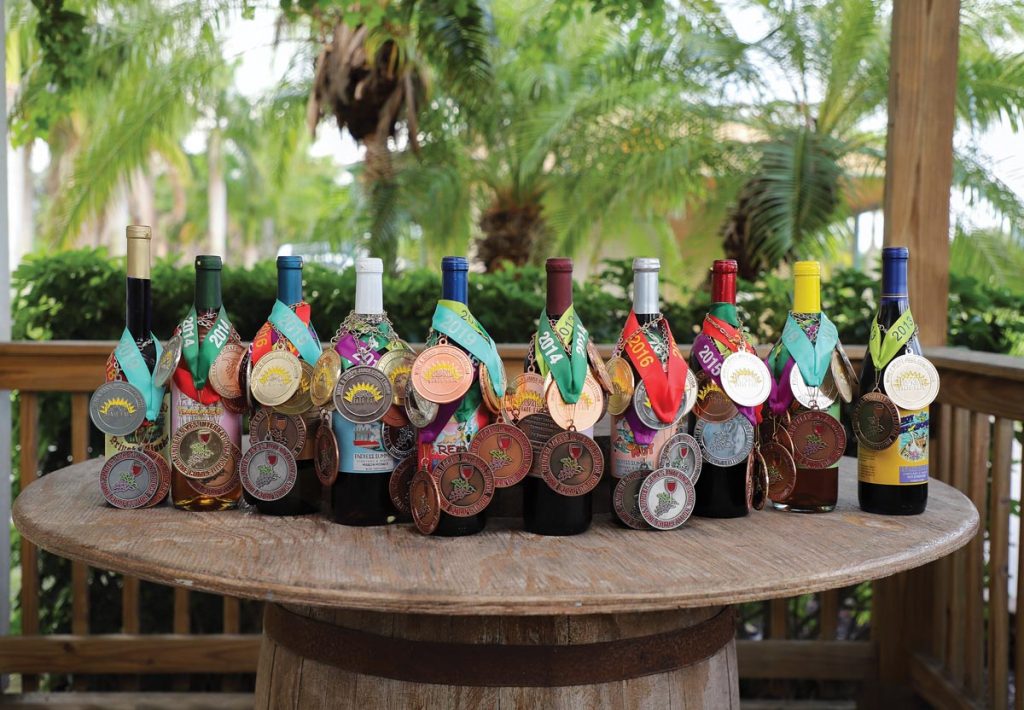
Let’s begin our Florida wine trail close to home, with award-winning Summer Crush
Vineyard & Winery in Fort Pierce, founded by Gary Roberts and described by winemaker Allen Cooley as “an off-the-cuff idea that turned into a labor of love.” Near the tasting room, row upon row of Muscadine vines can be seen. Cooley explains that the Muscadine grapes “are picked like berries,” and Summer Crush uses hand-harvesting exclusively.

“Muscadine wines are generally not aged; you drink them young,” says Cooley. That has its own advantage, since it means sulfite use is minimal. Sulfites are often used as preservatives in wine, and that’s less of an issue in a wine that is meant to be enjoyed young. Summer Crush also offers nonalcoholic Muscadine juice, both red and white, which showcases the fruit in a different yet very refreshing way.
Muscadine wines usually range from sweet to off-dry, and they’re brimming with fruit flavor. That also makes them natural choices for port-style wines. Summer Crush has one with the swashbuckling name “Cap’n Polly’s Private Plunder” and a label featuring a colorful parrot wearing a pirate’s hat. An earlier version was known as “Not Starboard.” Cap’n Polly’s is aged in bourbon barrels.
Although there are over 300 varieties of Muscadine, Summer Crush focuses on two: Noble for red wine and Carlos for white. Cooley believes that the Noble and Carlos varieties have been found to be the cream of the crop for Muscadine wine.
Chautauqua Winery
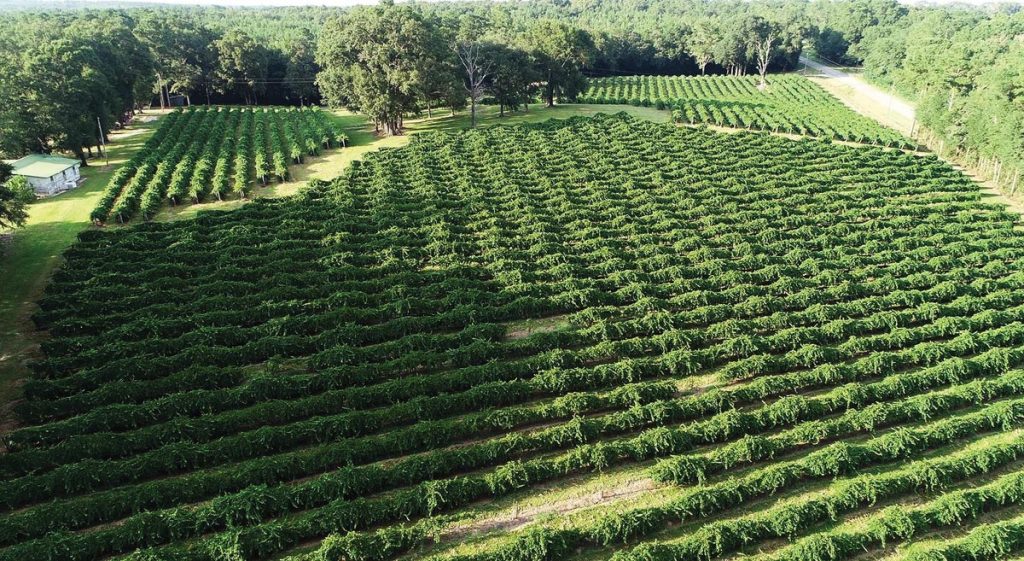
The focus on Noble and Carlos varieties is a pattern on our Florida wine trail. They are also the stars at Chautauqua Winery, located in DeFuniak Springs on the Emerald Coast.
“Our winemaker’s got a lot of medals under his belt,” says marketing manager Taylor Yaudes. “He’s really good at doing light Muscadine wines.” There’s a folksy atmosphere at Chautauqua that seems fitting for Muscadine, which has been called “the grape of the Deep South.” Wines can be ordered from Chautauqua’s website and shipped to the Vero Beach area.
Chautauqua has some specialties that are exclusive to members of their wine club. This reserved selection includes a mead that, like historical meads, is made from honey and has about the same alcohol percentage as grape wine. Chautauqua’s facilities include a custom-built European press and enough oak barrels to age 1,980 gallons of wine at a time.
Lakeridge Winery
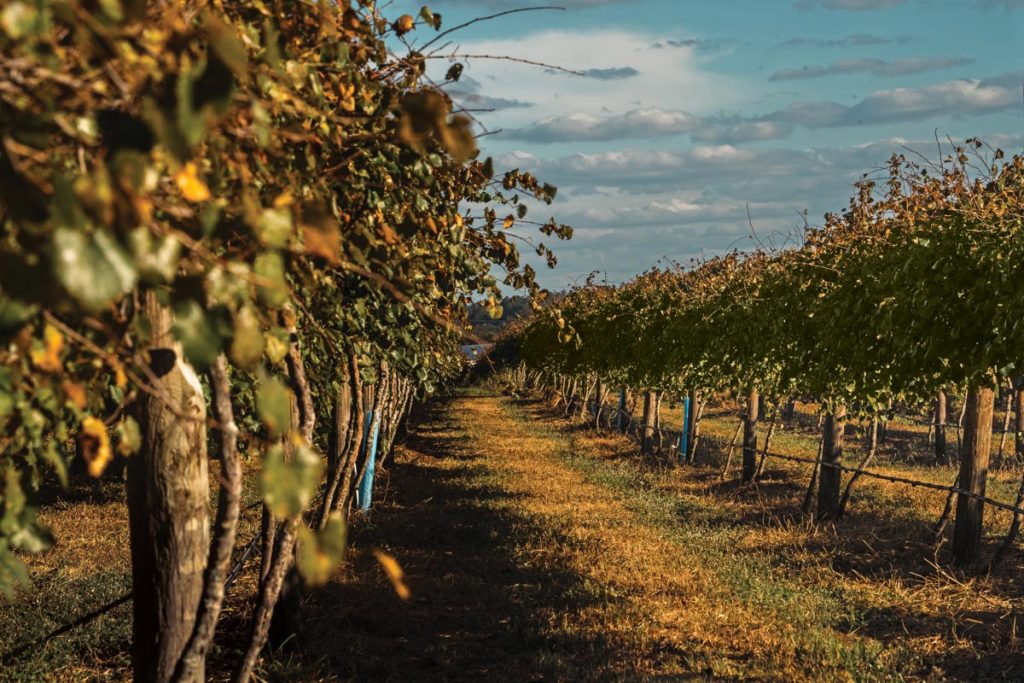
“Lakeridge is a family business—I’m third generation,” says Christian Slupe, whose grandfather started the enterprise “with 5 acres of vineyards in Tallahassee.” Today they have 110 acres of vineyard in the Panhandle, where the clay soil has advantages; however, they found there were not enough customers or tourists there, Slupe explains, leading to the Clermont location being established in the 1980s. On their 70 acres in Clermont, the sandy soil is enhanced with drip irrigation. Illustrating the difference, Slupe notes that harvest averages 6 to 8 tons per acre at Clermont and 11 to 13 tons per acre in the Panhandle. There is also a two-week difference in the time of harvest.
Describing how well Muscadine prospers in Florida, Slupe says, “During the peak, Muscadine vines can grow 2 to 3 inches a day, which is crazy. And they can withstand summers that are hot and humid to say the least.”
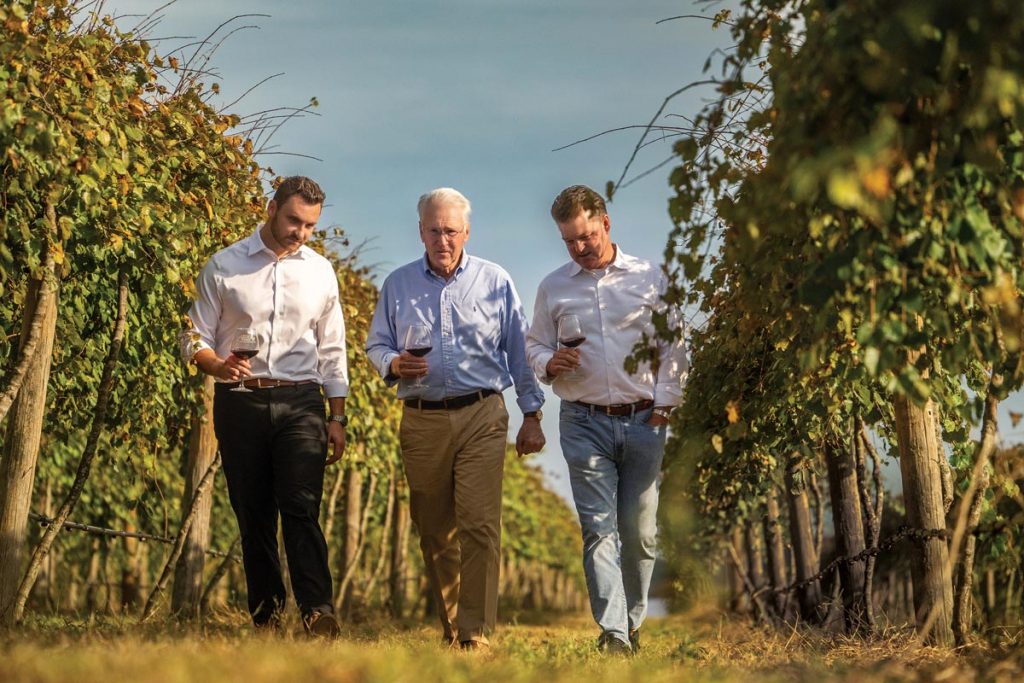
The Lakeridge flagship is Vintner’s Red, also marketed as Southern Red, a fruit-forward wine served lightly chilled. “We took that and ran with it,” Slupe says. However, Lakeridge also offers an after-dinner wine, Proprietor’s Reserve, that is made using an innovative technique: it is fortified with cream sherry. Therefore, although most after-dinner wines are fortified with brandy or grape spirits, Proprietor’s Reserve is actually fortified with another fortified wine. The unusual strategy was developed by Lakeridge’s longtime winemaker Jeanne Burgess, and it has yielded excellent results.
Keel & Curley Winery
Having gotten its start with blueberries, this Plant City enterprise exemplifies the fruit wine aspect of Florida wineries. Its origin story concerns a blueberry farmer named Joe Keel who had a very good year. Looking to use surplus berries in an interesting new way, he made 10 gallons of blueberry wine. Today, Keel & Curley blueberry wine is available either dry or sweet, in an interesting nod to grape wine categories.

The blueberry wines are truly fruit wines, made from blueberries instead of grapes. On the other hand, some Keel & Curley offerings blend grape wine (made from grapes grown elsewhere) with Florida fruit. The choices have tropical flair and include a Sauvignon Blanc blended with Key limes. Black raspberry, strawberry, and a kiwi-pear combination are also featured. Craft beers and ciders are also made, the latter through a partnership with Beak & Skiff Apple Orchards in New York State. Cider flavors include mango, pineapple, and elderberry.
The establishment is also a livestock farm; Keel & Curley wines play on that aspect with a whimsical label featuring a rooster standing on a cow.
San Sebastian
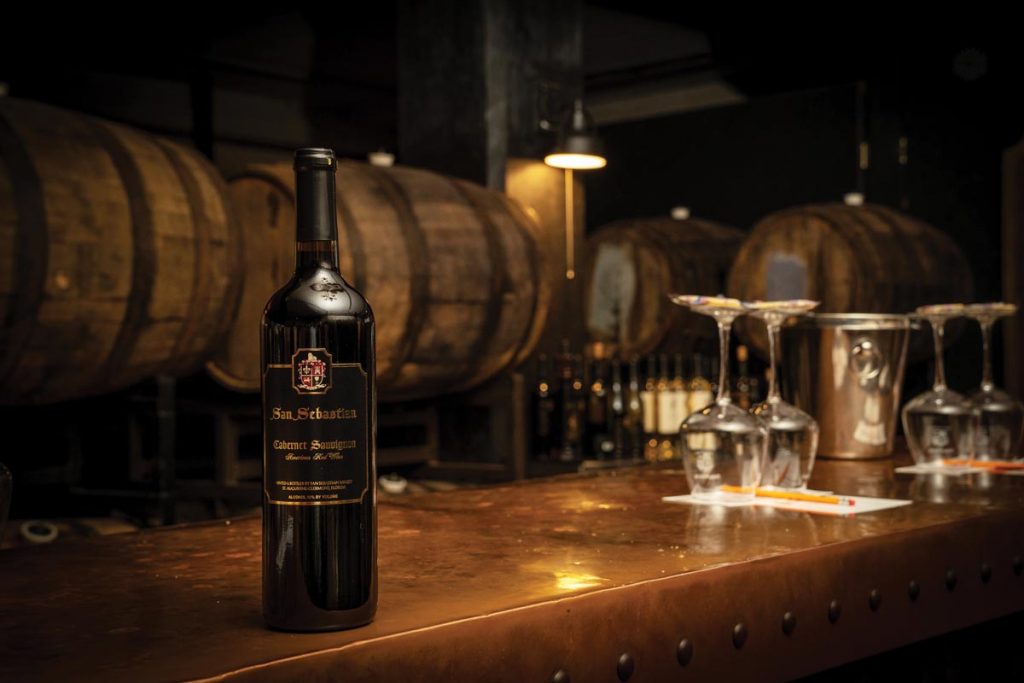
The sister winery of Lakeridge is San Sebastian in St. Augustine. Charles Cox, president of Seavin Inc., which owns both wineries, notes that barrel aging takes place in St. Augustine. Therefore, “all of the port happens here.” (San Sebastian Port is the focus of this month’s Off the Vine column.) A tasting area in the barrel room allows visitors to sample wines in this atmospheric locale.

As befits his St. Augustine location, Cox is fascinated by the history of winemaking in Florida. Including Fort Caroline to the north, he says, “Winemaking started with the French settlers. They brought vines from Europe, but they didn’t do well in the climate, so when they found Muscadine vines growing wild, they began cultivating them for the first winemaking in North America.”
The story of Florida winemaking circles continuously to its beginnings. With vinifera varieties defeated by the environment, winemakers have embraced the potential of the native Muscadine grapes. That was true for the French and Spanish in the 1500s, and it is true today. No wonder Cox calls the St. Augustine location “a nod to history.”





 True Tails is a series written by Amy Robinson for Vero Beach’s dog lovers. Ask Amy about your dog’s behavior by clicking below.
Facebook Comments