


On a warm, clear January evening, about 100 foodies gather at a lauded local venue for an experience that promises to entice even the most discerning palates. Long tables are set and decorated under the pavilion at Tree House Vero Beach, a working lychee farm just off U.S. Highway 1 that feels like a world away from traffic and noise.
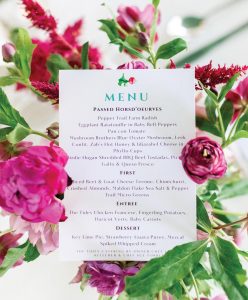
Oak trees and flower gardens surround the guests, some of whom grab craft cocktails, while others enjoy passed appetizers. This is a first for Tree House, which kicked off its all-new farm-to-table dinners in 2025 with a menu crafted and prepared by Chefs Leanne Kelleher and Sue Torres of The Tides restaurant.

For Pam Hund, co-owner of Tree House, farm-to-table is about sharing more than just great food. “The whole idea of Tree House is to share our farm with the community, but many of our events are weddings and private functions,” she says. “These dinners were an opportunity to open it up so people could experience dining outside on a real farm.”
The menu for this first dinner consists of what is currently being harvested. “We depend on the chefs to tap their farm sources based on the season,” explains Hund. “Farm-to-table has to be responsive to what is fresh now.” The dinner events began in January with Vero Beach favorite The Tides handling the cooking duties, followed in February by Chef’s Table, one of the first true farm-to-table restaurants on the Treasure Coast. Then Dolly’s Table, a celebrated food truck with island fare, brought its creative vision to Tree House.


“We have had fun doing this,” says Hund. “We love bringing the community together around fine food, craft cocktails, talented musicians, and people sharing their passion for local flavor.”
Committing to freshness takes planning. “It’s much easier to order large quantities from a distributor to serve this many people,” Hund says. “Sourcing locally, one farm at a time, is more challenging but worth it. The food is fresher, it tastes better, and we support local farmers from right down the road.”

Local supplier Mushroom Brothers in Sebastian grows a type of mushroom that makes a culinary impact. “We grow one mushroom: the beautiful blue oyster,” says Josh DiBiasio, co-owner of Mushroom Brothers, along with J.D. Mumford. “We decided to focus on one variety and perfect it. That simplifies things and allows us to be more predictable as to when we can deliver fresh mushrooms.”
Once DiBiasio and Mumford were growing top quality consistently, they ramped up their production in climate-controlled greenhouses and began to approach local chefs with samples. “It’s fun to see people’s reactions when they see the delicate blue color; it really fits this area,” says Mumford.

“Most people don’t know that, unlike plants, mushrooms actually breathe oxygen,” he explains. “They need to exhale the CO2. Once the mushroom flowers, the part you eat, we can see the CO2 level rise in the greenhouse.” By the time this mushroom variety gets to a store, it can lose its form and color. “For our restaurant clients, we’ll pick them Monday night or Tuesday morning for a Tuesday delivery. Everything about them is more enjoyable if they are fresh.”
Mumford and DiBiasio have been friends since childhood, and both enlisted for military service. “It’s a two-man show,” says DiBiasio. “This was originally a hobby, but once we started establishing a network with other growers, I realized I was missing this: fresh, healthy food, the fruits of our labor. It just feels good.”

Like the Mushroom Brothers, Stephen Maresca of Pepper Trail Farm sees local farming as a labor of love. “I work every day, all day, and it still doesn’t feel like a job,” he says. “I have always enjoyed growing things. It’s all a cycle: prep the ground, plant the seed, care for it to get it to harvest. You become very in tune with what you’re growing.”
Pepper Trail delivers to The Tides, Vincent’s, Michael’s on 7th, The Oar, and private clubs as well. “I grow almost 500 pounds of lettuce a week to keep up with demand,” says Maresca.

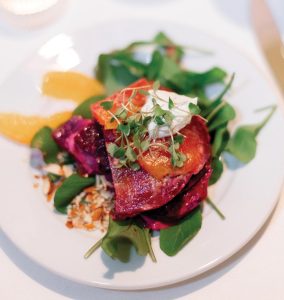
At the first Tree House farm-to-table dinner, Chef Leanne Kelleher took Pepper Trail Farm offerings and made a radish eggplant ratatouille in tender baby bell peppers. Having attended culinary school, Maresca appreciates the creativity applied to his wares. “I grew up with some of these chefs,” he says, “and now they are in a position to put just-picked local produce on their tables. It’s fun to see what they come up with.”
For Zach Saunders, proprietor of the Dolly’s Table food truck, partnering with Tree House for two farm-to-table dinners felt like a natural fit. “My grandmother Dolly had a huge influence on me growing up—always cooking, always feeding people, always making every meal feel like love,” he says. “Growing up in Vero Beach and having spent years cooking professionally in Hawaii and in kitchens in Thailand, Indonesia, and Vietnam, I’m drawn to food that celebrates fresh, local ingredients in a relaxed, communal atmosphere. The Tree House dinners offered exactly that: a vibrant farm setting, homegrown produce, and an opportunity to share my island‑inspired flavors right here at home.”

Farm-to-table eating in Florida is in our blood. We made our reputation with citrus, but crops such as blueberries and strawberries, spring potatoes, corn, peppers, snap beans, watermelon, and squash are bountiful, with 90 percent of the harvest coming from small farms, as defined by less than $250,000 in receipts annually. Florida is home to more than 40,000 small farmers, according to the Florida Department of Agriculture and Consumer Services.
For us, that means a short journey from farm to fork, which keeps nutrient levels high. The future of local farming seems bright, but it takes dedication and hard work to keep up with demand.

“After COVID, everyone wanted to get outside and they became more conscious of their food,” says Maresca. “To be a local farmer, the labor is intense. At Pepper Trail Farm, it’s all hand work, no mechanization.” He wonders where the future farmers will come from. “My hope is that some of the inactive citrus groves will be repurposed and farmed by the next generation.”
The patrons at the Tree House dinners were treated to more than just tasty local food. Kelly Sagastume came with a small group to celebrate her friend Mitzie’s birthday. “This event popped up on my social feed and I thought it would be a really fun, unique girls’ night,” she says. “This is more than I expected; this place is absolutely gorgeous.”


The seating under the pavilion is at long, communal tables decorated with flowers and place cards. Live music inspires many patrons to get up and dance. Dr. Divya Haryani appreciates the opportunity to meet new people and support local businesses. “This feels different than going out to a restaurant,” she says. “You are interacting with new people and having open conversations. To enjoy the meal without too much processing or shipping, all while supporting the farmers, the venue, the local restaurant—the whole event just comes together.”

 True Tails is a series written by Amy Robinson for Vero Beach’s dog lovers. Ask Amy about your dog’s behavior by clicking below.
Facebook Comments